Monthly Archives: September 2009

Maghaz Nihari

Maghaz Nihari is purely a pakistani dish. Its a kind of beef stew cooked on low heat with spices and Fried brains. Do try this and make your day lovely …

Ingredients:

  • 1 kg beef (4-6 large pieces)
  • ½ kg knuckle and marrow meat (beef)
  • 1 ½ cup oil
  • 1 tspn garlic paste
  • Onion sliced
  • 50 gms of wheat Flour
  • Lots of water

MASALA

  • 2 tbspns red chilli powder
  • Salt to taste
  • 2 tspn nigella seeds
  • 1 tbspn garlic powder
  • 3 tbspn Fried dried onion
  • 3 tbspn cumin seeds
  • 2 bay leaves
  • 1 tspn Fennel seeds
  • 2 tbspn black pepper
  • 2 tspns mace
  • 2 tbspn nutmeg
  • 1 tbspn ginger powder
  • 2 tbspn black cumin
  • 1 tspn cloves
  • ½ cup lemon juice

FOR MAGHAZ*

  • 3 goat or lamb brains
  • 1 tbspn ghee* or 4 tbspns olive oil

FOR GARNISHING

  • A bunch of coriander
  • 3 – 4 green chillies sliced
  • A big piece of ginger sliced thinly

Procedure:

-Combine all the masala ingredients except lemon juice and grind well into powder and mix with lemon juice.

-Now in a large, thick bottomed pot, heat one cup of oil. Add garlic and stir and then add meat, bones and masala and Fry For Few minutes. Add 13 glasses of water and cover. Cook on very low heat until the meat is very tender (For beef it will take something around 6 – 8 hours).

-Dissolve 50 gms of Flour in 3 glasses of water (avoid lumps) and stir this mixture into the curry and stir well. Remove bones if you want to.

-Boil brains For 5 minutes. Heat ghee or oil and Fry boiled brains in it. Stir this through Nihari.

-Cook For 15 minutes and meanwhile Fry onions in rest of the oil.

-Add Fried onions + oil to the mixture and again cook on low heat For 30 minutes.

-And Finally after a lot of struggle and cooking, Nihari is ready. Serve it hot with naan or parathas and enjoy.

Outcome:

Tasty homemade Maghaz Nihari is ready to be served.

Ayesha's Kitchen

Ayesha's Kitchen

Tips:

-Avoid lumps while mixing wheat Flour and water.

-Take shin meat.

Servings:

This will serve 10 persons easily.

Palak Paneer

This is the most popular Indian dish which is served in almost every Indian restaurant and it is the most Favourite vegetarian
dish. Do try this and let me know your remarks …

Ingredients:

  • 2 cups Boiled and ground spinach
  • 1/3 lbs cottage cheese cubed
  • Oil For deep Frying
  • ¼ cup vegetable oil
  • Salt to taste
  • ½ red chilli powder
  • ½ tspn turmeric powder
  • ¼ tspn ground garam masala
  • 2 green chillies
  • ¾ cup tomato puree
  • ½ tspn ginger paste
  • 2 tbspns cream

Procedure:

-Cut cottage cheese into cubes and deep Fry it For 2 minutes until golden brown.

-Take it out and allow it to cool.

-Heat vegetable oil in a pan and add red chilli powder, salt, turmeric powder, garam masala and ginger paste in it and after a minute add tomato puree into it.

-Cook it For 2 minutes on medium heat.

-Now add spinach in it and cook well For 4 minutes.

-Now add cream into it to make it smooth.

-Now add green chillies and cottage cheese and mix.

-Delicious palak paneer is ready to be served with Lebanese bread or nan bread.

Outcome:

Tasty palak paneer is ready.

palak-paneer

Tips:

-Fry cottage cheese before adding it into the curry, it will not melt.

-Do add cream to make it smooth.

Servings:

This will serve 4 persons.

Keema* Paratha*

Keema Paratha is a lovely, non – vegetarian stuffed paratha and believe ,me its awesome …

Ingredients:

FOR FILLING

FOR PARATHAS        

Procedure:

-Marinade mincemeat with all the ingredients given under the heading of Filling. In a thick bottomed pot, place this whole mixture and cook it covered on very low heat.

-After 30 – 45 minutes, it will be cooked, take it out in a plate and allow it cool.

-Now make a kiwi Fruit sized ball and roll it on a lightly Floured surface. Place some Keema*, mixture on it and close all of its edges with Filling trapped in.

-Now roll it again into a nice chapatti and place it on hot Flat pan, tawa*.

-After sometime change its side and spread 1 tbspn of ghee on it and then change its side again.

-On the other side spread 1 tbspn of ghee and then change its side again.

-Change its sides Frequently and when it is hot red, remove From heat and serve hot with yogurt or sour cream.

-Do the same with others.

Outcome:

Tasty Keema parathas are ready to be served.

Ayesha's Kitchen

Ayesha's Kitchen

Tips:

-Cook meat well.

-No need of adding water while cooking mincemeat.

Servings

This will serve 4 persons easily.

Seasonal Fruit Chaat

This chaat is made up of seasonal Fruits, you can add any other Fruit that is on Season …

Ingredients:

  • 2 apples
  • 2 bananas
  • 4 strawberries
  • 1 mandarin (Orange)(squeezed)
  • 1 tspn chaat masala
  • ½ pineapple sliced
  • 125 ml. canned chickpeas or ½ cup boiled chickpeas
  • 4 dates sliced

Procedure:

-Slice all the Fruits nicely and combine them in a deep mixing bowl.

-In a separate bowl mix 1 tspn of chaat masala with mandarin juice.

-Introduce this mixture to the Fruit Bowl and mix well.

-Keep aside For 20 minutes and serve.

Outcome:

Tasty Fruit chaat is ready to be served.

Ayesha's Kitchen

Ayesha's Kitchen

Tips:

-You can use any other Fruits which are easily available in markets.

Servings:

This will serve 4 persons easily.

*refer to glossary.

Vegetable Of The Weak PEA

Ayesha's Kitchen

Ayesha's Kitchen

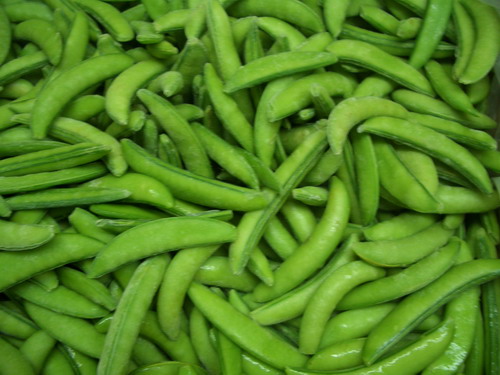
A pea is most commonly the small spherical seed or the seed-pod of the legume Pisum sativum. Each pod contains several peas. Although it is botanically a fruit, it is treated as a vegetable in cooking. The name is also used to describe other edible seeds from the Fabaceae such as the pigeon pea (Cajanus cajan), the cowpea (Vigna unguiculata), and the seeds from several species of Lathyrus.

P. sativum is an annual plant, with a life cycle of one year. It is a cool season crop grown in many parts of the world; planting can take place from winter through to early summer depending on location. The average pea weighs between 0.1 and 0.36 grams. The species is used as a vegetable – fresh, frozen or canned, and is also grown to produce dry peas like the split pea. These varieties are typically called field peas.

The wild pea is restricted to the Mediterranean basin and the Near East. The earliest archaeological finds of peas come from Neolithic Syria, Turkey and Jordan. In Egypt, early finds come from c. 4800–4400 BC in the delta area, and from c. 3800–3600 BC in Upper Egypt. The pea was also present in 5th millennium BC Georgia. Further east, the finds are younger. Pea remains were retrieved from Afghanistan c. 2000 BC. They were present in 2250–1750 BC Harappa Pakistan and north-west India, from the older phases of this culture onward. In the second half of the 2nd millennium BC this pulse crop appears in the Gangetic basin and southern India.

Description

The pea is a green, pod-shaped vegetable, widely grown as a cool-season vegetable crop. The seeds may be planted as soon as the soil temperature reaches 10°C (50°F), with the plants growing best at temperatures of 13 to 18°C (55°F-65°F). They do not thrive in the summer heat of warmer temperate and lowland tropical climates but do grow well in cooler high altitude tropical areas. Many cultivars reach maturity about 60 days after planting. Generally, peas are to be grown outdoors during the winter, not in greenhouses. Peas grow best in slightly acidic, well-drained soils.

Peas have both low-growing and vining cultivars. The vining cultivars grow thin tendrils from leaves that coil around any available support and can climb to be 1–2 m high. A traditional approach to supporting climbing peas is to thrust branches pruned from trees or other woody plants upright into the soil, providing a lattice for the peas to climb. Branches used in this fashion are sometimes called pea brush. Metal fences, twine, or netting supported by a frame are used for the same purpose. In dense plantings, peas give each other some measure of mutual support. Pea plants can self-pollinate.

Culinary Use

Frozen green peasIn early times, peas were grown mostly for their dry seeds. In modern times, however, peas are usually boiled or steamed, which breaks down the cell walls and makes the taste sweeter and the nutrients more bio-available. Along with broad beans and lentils, these formed an important part of the diet of most people in Europe during the Middle Ages (Bianchini 1975 p 40). By the 1600s and 1700s it had become popular to eat peas “green”, that is, while they are immature and right after they are picked. This was especially true in France and England, where the eating of green peas was said to be “both a fashion and a madness” (OSU 2006). New cultivars of peas were developed by the English during this time which became known as garden peas and English peas. The popularity of green peas spread to North America. Thomas Jefferson grew more than 30 cultivars of peas on his estate (Kafka 2005 p 297). With the invention of canning and freezing of foods, green peas became available year-round, and not just in the spring as before.

Peas in a dishFresh peas are often eaten boiled and flavored with butter and/or spearmint as a side dish vegetable. Salt and pepper are also commonly added to peas when served. Fresh peas are also used in pot pies, salads and casseroles. Pod peas (particularly sweet cultivars called mange tout and sugar peas, or the flatter “snow peas,” called hé lán dòu, 荷兰豆 in Chinese) are used in stir-fried dishes, particularly those in American Chinese cuisine.[1] Pea pods do not keep well once picked, and if not used quickly are best preserved by drying, canning or freezing within a few hours of harvest.

In India, fresh peas are used in various dishes such as aloo matar (curried potatoes with peas) or matar paneer (paneer cheese with peas), though they can be substituted with frozen peas as well. Peas are also eaten raw, as they are sweet when fresh off the bush. Split peas are also used to make dhal, particularly in Guyana, and Trinidad, where there is a significant population of Indians.

Dried peas are often made into a soup or simply eaten on their own. In Japan, China, Taiwan and some Southeast Asian countries, including Thailand and Malaysia, the peas are roasted and salted, and eaten as snacks. In the UK, dried yellow split peas are used to make pease pudding (or “pease porridge”), a traditional dish. In North America, a similarly traditional dish is split pea soup.

Dry, yellow split peasÄrtsoppa is a traditional Scandinavian food which predates the Viking era. This food was made from a fast-growing pea that would mature in a short growing season. Ärtsoppa was especially popular among the many poor who traditionally only had one pot and everything was cooked together for a dinner using a tripod to hold the pot over the fire. When pork was available it was known as Ärtsoppa och fläsk and this tradition has continued to the present day. After the Christian conversion this soup was served on Thursday evening because Friday was a fasting day.

In Chinese cuisine, pea sprouts (豆苗; dòu miáo) are commonly used in stir-fries. Pea leaves are often considered a delicacy as well.

In Greece, Turkey, Cyprus, and other parts of the Mediterranean, peas are made into a stew with meat and potatoes.  

Wasabi peas.In the United Kingdom, dried, rehydrated and mashed marrowfat peas, known by the public as mushy peas, are popular, originally in the north of England but now ubiquitously, and especially as an accompaniment to fish and chips or meat pies, particularly in fish and chip shops. Sodium bicarbonate is sometimes added to soften the peas. In 2005, a poll of 2,000 people revealed the pea to be Britain’s 7th favorite culinary vegetable.[citation needed]

Processed peas are mature peas which have been dried, soaked and then heat treated (processed) to prevent spoilage—in the same manner as pasteurising. Cooked peas are sometimes sold dried and coated with wasabi as a spicy snack.

Some forms of etiquette require that peas be only eaten with a fork and not pushed onto the fork with a knife.

Recipes:

Aalu Mattar*
Fruit Of The Week JAMBUL

Ayesha's Kitchen

Ayesha's Kitchen

Jambul (Syzygium cumini) is an evergreen tropical tree in the flowering plant family Myrtaceae, native to Bangladesh, India, Nepal, Pakistan and Indonesia. It is also known as Jaam/Kalojaam, Jamun, Nerale Hannu, Njaval,Neredupandu, Jamblang, Jambolan, Black Plum, Damson Plum, Duhat Plum, Jambolan Plum, Java Plum or Portuguese Plum. “Malabar plum” may also refer to other species of Syzygium.

It is also grown in other areas of southern and southeastern Asia including the Philippines, Myanmar, and Afghanistan. The tree was also introduced to Florida, USA in 1911 by the USDA, and is also now commonly planted in Suriname. In Brazil, where it was introduced from India during Portuguese colonization, it has dispersed spontaneously in the wild in some places, as its fruits are eagerly sought by various native birds such as thrushes, tanagers and the Great Kiskadee. Scientific synonyms include Syzygium jambolanum, Eugenia cumini and Eugenia jambolana.

A fairly fast growing species, it can reach heights of up to 30 m and can live more than 100 years. Its dense foliage provides shade and is grown just for its ornamental value. The wood is strong and is water resistant. Because of this it is used in railway sleepers and to install motors in wells. It is sometimes used to make cheap furniture and village dwellings though it is relatively hard to work on.

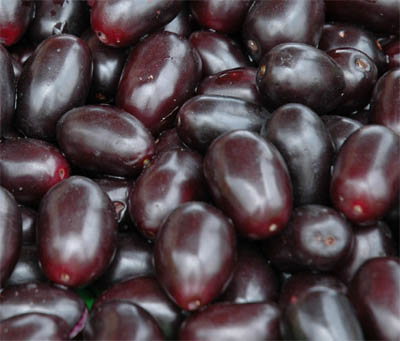
Jamun trees start flowering from March to April. The flowers of Jamun are fragrant and small, about 5 mm in diameter. The fruits develop by May or June and resemble large berries. The fruit is oblong, ovoid, starts green and turns pink to shining crimson black as it matures. A variant of the tree produces white coloured fruit. The fruit has a combination of sweet, mildly sour and astringent flavour and tends to colour the tongue purple. The seed is also used in various alternative healing systems like Ayurveda (to control diabetes, for example, Unani and Chinese medicine for digestive ailments. The leaves and bark are used for controlling blood pressure and gingivitis. Wine and vinegar are also made from the fruit. It has a high source in vitamin A and vitamin C.

Jambul has been spread overseas from India by Indian emigrants and at present is common in former tropical British colonies.