Yearly Archives: 2009

VEGETABLE OF THE WEEK Spring Onion (Scallion)

V00228b

A scallion, also commonly known as spring onion, green onion or salad onion, is associated with various members of the genus Allium that lack a Fully – developed bulb. Harvested For their taste, they tend to be milder than other onions and may be steamed or set in salads in Western cookery and cooked in many asian recipes. Diced scallions are often used in soup, noodle and seafood dishes, and in sauces in eastern dishes, after removing the bottom quarter inch or so of the root end.

The species most commonly associated with the name is the Welsh onion, Allium Fistulosum. Scallion is sometimes used For Allium ascalonicum, better known as the shallot. The words scallion and shallot are related and can be traced back to the Greek askolonion as described by the greek writer Theophrastus; this name, in turn, seems to originate From the Philistine town of Ascalon. The shallots themselves apparently came From Farther east.

Other Names And Varieties

Scallions have various common names throughout the world. In some, countries, green onions are called shallots, and shallots are referred to by alternative names such as eschallot or eschalotte.

  • Argentina: cebolla de verdo
  • Australia: shallots
  • Austria: jungzwiebel
  • Bolivia: cebolla verde
  • Brazil: cebolinha verde
  • Bulgaria: Fresh onion
  • Cambodia: slirk k’tum
  • Canada: green onion
  • Quebec: echalote
  • China: cong
  • Chile: cebollin
  • Colombia: rama or cebolla larga
  • Cuba: cebollino
  • Czech republic: jami cibulka
  • Dominican republic: puerro
  • Egypt: basal axdar
  • Finland: vihersipuli
  • France: ciboule
  • Germany: winterzwiebel
  • Italy: cipollotti

Etc. Etc. Etc.

Escallion

The scallion is a culinary herb. Grown in Jamaica and Trinidad and Tobago, it is similar in appearance to the scallion, Welsh onion and leek, though said by Jamaicans to be more Flavoursome. Like these others, it is a relatively mild onion that does not Form a large bulb.

The Jamaican name is probably a variant of scallion, although like scallion, this term is itself used loosely at different times to denote the spring onion, the leek, the shallot and the green stalk of the immature garden onion. The spelling escalion is recorded in the eighteenth century; scallion is older, dating From atleast the Fourteenth century. To add to the confusion, the spring onion is known in some countries as the eschallot. The term scallion is now not current in English outside its Jamaican usage.

Scallion is a common and much prozed ingredients in authentic Jamaican cuisine, in combination with thyme, scotch bonnet pepper, garlic and allspice (called primento). Recipes calling For scallion sometimes suggest the use of leek as a substitute, though in salads, scallions would be more appropriate; neither is seen by Jamaicans as truly adequate. Jamaican dried spice mixtures that include scallion are available commercially. Fresh scallion is difficult to Find and expensive outside Jamaica itself.

Recipes:

Spring onion recipes can be easily Found in Ayesha’s Kitchen:

Vegetable Mushroom Rice

Fruit Of The Week GRAPE

grapes

A grape is the non – climacteric Fruit, botanically a true berry that grows on the perennial and deciduous woody vines of the genus vitis. Grapes can be eaten raw or used For making jam, juice, jelly, vinegar, and wine, grape seed extracts, raisins and grape seed oil. Grapes are also used in some kinds of candy.

Description

Grapes grow in clusters of 6 o 300, and can be crimson, black, dark blue, yellow, green and pink. “White” grapes are actually green in colour, and are evolutionarily derived From the red grape. Mutations in two regulatory genes of white grapes turn off production of anthocnins which are responsible For the colour of red grapes. Anthocyanins and other pigment chemicals of the large Family of polyphenols in red grapes are responsible For the varying shades of purple in red wines.

History

Ancient Egyptian hieroglyphics show the cultivation of grapes. Scholars believe that ancient Greeks, Phoenicians and Romans also grew grapes both For eating and wine production. Later, the growing of grapes spread to Europe, North Africa, and eventually to the united states. Native grapes in North America grew along streams; however, the First cultivated grapes in California were grown by Spanish Franciscan Friars looking to make a sacramental wine For the California Missions. The First table grape vineyard in California is credited to an early settler by the name of William Wolfskill in Los Angeles Area. As more settlers came to California, more and more varieties of European grapes were introduced, some For wine-making, others For raisins and some For eating Fresh.

Today in the United States, approximately 98% of commercially grown table grapes are From California (California Table Grape Commission).

Distribution And Production

According to the Food and Agriculture Organization (FAO) 75, 866 square kilometres of the world are dedicated to grapes. Approximately 71% of world grape production is used For wine, 27% as Fresh Fruit, and 2% as dried Fruit. A portion of grape production goes to producing grape juice to be reconstituted For Fruits canned “with no added sugar” and “100% natural”. The area dedicated to vineyards is increasing by about 2% per year.

Recipes

You can Find number of Grapes recipes in Ayesha’s Kitchen under the category of “Grapes”.

Vegetable Of The Week ONION

onions_0

Onion is a term used For many plants in the genus Allium. They are known by the common name “onion” but, used without qualifiers; it usually refers to Allium cepa. Allium cepa is also known as the “garden onion” or “bulb” onion.

They are called “pyaj” in hindi, “pyaaz” in Urdu and “kanda” in Punjabi. Onions are part of the Lily Family. There are many varieties of onions. There are 2 main groups of onions, dried r green.

Uses

Onions, one of the oldest vegetables known to humankind, are Found in a large number of recipes and preparations spanning almost the totality of the world’s cultures. They are nowadays available in Fresh, Frozen, canned, pickled, powdered, chopped, and dehydrated Forms. Onions can be used, usually chopped or sliced, in almost every type of Food including cooked Foods and tge Fresh salads and as a spicy garnish. They are rarely eaten on their own but usually act as accompaniment to the main course. Depending on the variety, an onion can be sharp, spicy, tangy and pungent or mild and sweet.

Onions pickled in vinegar are eaten as a snack. These are often served as a side serving in Fish and chip shops throughout the United Kingdom and are referred to simply as “pickled onions”. Onions are widely – used in India/ Pakistan and are Fundamental in the local cuisine. They are commonly used as a side dish. Onins are called “erulli/ulla gaddi” in Kannada “vulli payalu” in telugu and “kanda” in Marathi.

Tissue From onions is Frequently used in science education to demonstrate microscope usage., because they have particularly large cells which are readily observed even at low magnifications.

Medicinal Properties And Health Effects

Wide – ranging claims have been made For the effectiveness of onions against conditions ranging From the common cold to heart disease, diabetes, osteoporosis, and other diseases. They contain chemical compounds believed to have anti-inflammatory, anticholesterol, anticancer, and antioxidant properties such as quercetin. However, it has not been conclusively demonstrated that increased consumption of onions is directly linked to health benefits. Some studies have shown that increased consumption of onions reduces the risk of onions reduces the risk of head and neck cancers. In India some sects dont eat onion due to its alleged aphrodisiac properties.

In many parts of the world, onions are used to heal bristers and boils. A traditional Maltese remedy For Sea Urchin wounds is to tie half a baked onion to the afflicted area overnight. In the morning, the spikes will be in the onion. In the United States, products that ontain extract are used in the treatment of topuical scars; some studies have Found their action to be ineffective, while others Found that they may act as an anti – inflammatory or bacteriostatic and can improve collagen organization in rabbits.

Onions may be especially beneficial For women, who are at increased risk For osteoporosis as they go through menopause, by destroying ostoaclasts so that they do no break down bone.

An American chemist has stated that the pleiomeric chemicals in onions have the potential to alleviate or prevent sore throat.

Shallots have the most phenols, six times the amount Found in Vidalia onion, the variety with the lowest phenolic content. Shallots also have the most antioxidant activity, Followed by Western Yellow, pungent yellow, Northern Red, Mexico, Empire Sweet, Western White, Peruvian Sweet, Texas 1015, Imperial Valley Sweet, and Vidalia. Western yellow onions have the most Flavonoids, eleven times the amount Found in Western White, the variety with the lowest Flavonoids content.

For all varieties of onions, the more phenols and Flavonoids they contain, the most antioxidant and anti – cancer activity they provide. When tested against liver and colon cancer cells, Western Yellow, pungent yellow and shallots were most effective in inhibiting their growth. The milder-tasting varieties  – western white, Peruvian sweet, empire sweet, Mexico, Texas 1015, imperial valley sweet, and Vidalia – showed little cancer – Fighting ability.

Shallots and ten other onion varieties commonly available in the United States were evaluated: western yellow, northern red, pungent yellow, western white, Peruvian sweet, empire sweet, Mexico, Texas 1015, imperial valley sweet, and Vidalia. In general, the most pungent onions delivered many times the benefits of their milder cousins.

Some species of onion are poisonous, especially the wild onion Allium canadense. Symptoms include anemia, Heinz bodies and death.

Recipes

Ayesha’s Kitchen is the best centre For “onion” recipes and tips.

Fruit Of The Week FEIJOA

feijoa

The Feijoa, also known as pineapple guava or guavas teen, is an evergreen shrub or small tree, 1 – 7 metres in height, originating From the highlands of northern Brazil and parts of Colombia, Uruguay and northern Argentina. It has been spotted in Georgia and both Flowering and Fruiting in Lafayette, Louisiana and in Charleston, South Carolina, and California. It is widely cultivates as a garden plant and Fruiting tree in New Zealand, and can be Found as a garden plant in Australia.

Description

The Fruit matures in autumn and is green, ellipsoid – shaped and the size of a chicken egg. It has a sweet, aromatic Flavour. The Flesh is juicy and is divided into a clear jelly – like seed pilp and a Firmer, slightly gritty opaque Flesh nearer the skin. The Fruit drops when ripe, but can be picked From the tree prior to the drop to prevent bruising. The genus, also called Feijoa, is monotypic. Like the closely – related guava, the Fruit pulp has a gritty texture which is utilised in some natural cosmetic products as an exfoliate. Feijoa Fruit have a distinctive smell. The ester methyl benzoate smells strongly of Feijoas and the aroma of the Fruit is caused mostly by this and other closely related esters.

Consumption And Uses

The Fruit is usually eaten by cutting it in half, then scooping out the pulp with a spoon. The Fruit have a juicy sweet seed pulp, and slightly gritty Flesh nearer the skin. The Flavour is aromatic and sweet. If the utensils needed to eat it this way are not available, the Feijoa can be torn or bitten in half, and the contents squeezed out and consumed. An alternative is to bite the end off and then tear the Fruit in half length ways, exposing a larger surface with less curvature. The teeth can then scrape the pulp out closer to the skin, with less wastage. They can even be eaten whole, with only the junction to the plant cut off. The skin is sour and bitter, but provides a nice balance to the sweet pulp. Still, this is a less common method in some countries, but in Latin America, the Fruit’s homeland, it is often eaten this way. A Feijoa can also be used to make Feijoa wine or cider and Feijoa infused vodka. It is also possible to buy Feijoa Yogurt, Fruit drinks, jam, ice cream, etc. in New Zealand. The Feijoa can also be cooked and used in dishes where one would use stewed Fruit. It is popular ingredient in chutney.

Fruit maturity is not always apparent From the outside as the Fruit remain green until they are over mature or rotting. Generally the Fruit is at its optimum ripeness the day it drops From the tree. While still hanging it may well prove bitter. Once Fallen Fruit very quickly become overripe, so a daily collection of Fallen Fruit is advisable during the season. When the Fruits are immature the seed pupl is white and opaque, becoming clear and jelly – like when ripe. Fruits are at their optimum maturity when the eed pulp has turned into a clear jelly with no hint of browning. Once the seed pulp and surrounding Flesh start to brown, the Fruit is over mature and shouldn’t be eaten. However, these over mature but not rotten Fruits can be used to make a delicious juice very popular in places like the Colombian Highlands. The pink to white Flowers petals have a delightful Flavour, are crisp, moist, and Fleshy.

Shipping And Sale

Ripe Fruit is very prone to bruising; maintaining the Fruit in good condition For any length of time is not easy. This, along with the short period of optimum ripeness, probably explains why Feijoas, although delicious, are not widely exported, and where grown commercially are often only sold close to the source of the crop. Feijoas can be cool – stored For approximately a month and still have a Few days of shelf life at optimum eating maturity. They are also able to be put in the Freezer up to one year without a loss in quality. Because of the relatively short shelf life store keepers need to be careful to replace older Feijoas regularly to ensure high quality. In some countries, Feijoas can also be purchased at roadside stalls, often at lower price.

Cultivation

Some grafted cultivars self Fertile. Most are not, and require a pollenizer. Seedlings may or may not be of usable quality, and may or may not be self Fertile.

Seedlings may or may not be of usable quality, and may or may not be self Fertile. In New Zealand, the pollinators are medium sized birds such as the Silvereye in the cooler parts of the South Island, the blackbird or the Indian Myna Further North, which Feed on the sweet, Fleshy petals of the Feijoa Flower. In some areas where the species has been introduced, it has been unproductive due to lack of pollinators.

In Northern California, robins, mockingbirds, hummingbirds, starlings, scrub jays, towhees and grey squirrels Feast on the petals and can be assumed to be assisting with pollination. Honey bees also visit the Flowers.


Vegetable Of The Week JALAPENOS

jalapeno1

The jalapeno is a medium to large size chilli pepper which is prized For its warm, burning sensation when eaten. Ripe, the jalapeno can be 2 – 3 ½ inches long and is commonly sold when still green. It is cultivar of the species originating in Mexico. It is named after the town of Xalapa, Veracruz, where it was traditionally produced. 160 square kilometres are dedicated For the cultivation of jalapeno in Mexico alone, primarily in the Papaloapan river basin in the North of the state of Veracruz and in the Delicias, Chihuahua area. Jalapenos are also cultivated on smaller scales in Jalisco, Nayarit, Sonora, Sinaloa and Chiapas. The jalapeno is known by different names throughout Mexico, such as cuaresmenos, huachinangos, and Chile gordos.

As of 1999, 5, 500 acres (22km. Sq.) in he United States were dedicated to the cultivation of Jalapenos. Most jalapenos were produced in Southern New Mexico ad western Texas.

Jalapenos are a pod type of capsicum. The growing period For a jalapeno plant is 70 – 80 days. When mature, the plant stands two and a half to three Feet tall. Typically, a single plant will produce twenty Five to thirty Five pods. During a growing period, a plant will be picked multiple times. As the growing season comes to an end, the jalapenos start to turn red. The Fresh market consists of green jalapenos, and red jalapenos are considered inferior. Growers often either discard the red jalaenos into the ground or use them For the production of chipotles.

The jalapeno rates between 2500 and 10000 Scoville units in heat. In comparison with other chilli peppers, the jalapeno has a heat level that varies From mild to hot depending on cultivation and preparation. The heat, which is caused by capsaicin and related compounds, is concentrated in the veins surrounding the seeds, which are called picante. – Deseeding and deveining can reduce the the heat imparted to a recipe that includes jalapenos. They also have a distinct acidic taste. Handling Fresh jalapenos may cause mild skin irritation in some individuals. Some handlers choose to wear latex or vinyl gloves while cutting, skinning, or seeding jalapenos.

Recipes:

Following are the recipes containing Jalapeno pepper:

Sizzling Jalapeno Pizza

Paneer (Cottage Cheese)

Ingredients:

  • 1 litre milk
  • A medium sized lemon juice

Procedure:

-Boil milk.

-When it is boiling add lemon juice. Now you will observe that it begins to curd.

-After a minute remove it From heat.

-Demonstrate some utensils like, put a bowl and place a strainer on it. Place a muslin cloth on this strainer and pour this curdled mixture in it. When all water is drained and curds are left tie the muslin cloth From the top and place something which has a  weight on it.

-After 10 minutes open the clock and carefully take the cheese block out of it.

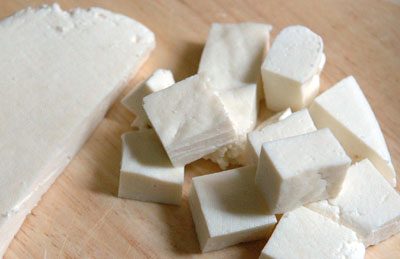
-Place it on a cutting board and cut it into blocks.

Outcome:

Use this tasty, homemade and Fresh paneer in daal paneer, palak paneer and mattar paneer.

paneer 

Tips:

-Demonstrate the utensils in the way it is advised.

Servings:

This will serve 1 dish.