Yearly Archives: 2009

Fruit Of The Week CHERRY

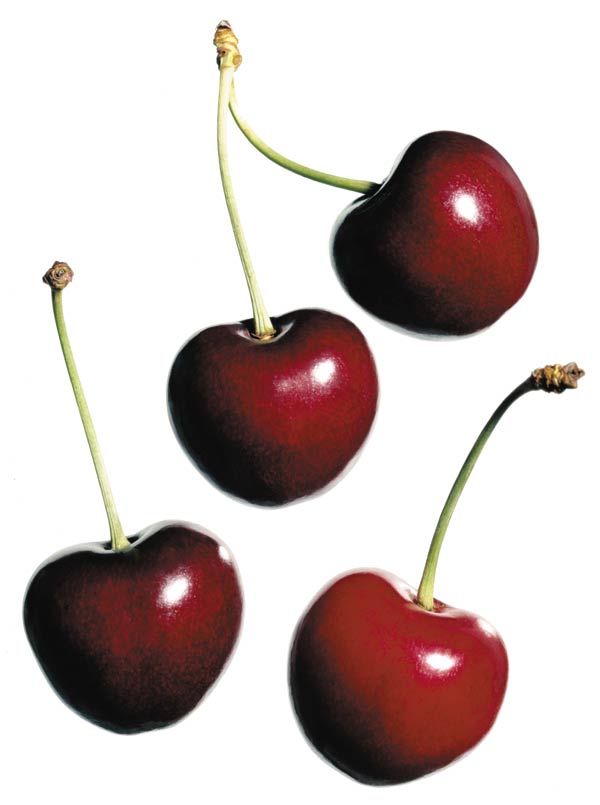
large4cherries

The word cherry refers to a fleshy fruit (drupe) that contains a single stony seed. The cherry belongs to the family Rosaceae, genus Prunus, along with almonds, peaches, plums, apricots and bird cherries. The subgenus, Cerasus, is distinguished by having the flowers in small corymbs of several together (not singly, nor in racemes), and by having a smooth fruit with only a weak groove or none along one side. The subgenus is native to the temperate regions of the Northern Hemisphere, with two species in America, three in Europe, and the remainder in Asia.

Food Value

Cherries contain anthocyanins, the red pigment in berries. Cherry anthocyanins have been shown to reduce pain and inflammation in rats. Anthocyanins are also potent antioxidants under active research for a variety of potential health benefits. According to a study funded by the Cherry Marketing Institute presented at the Experimental Biology 2008 meeting in San Diego, rats that received whole tart cherry powder mixed into a high-fat diet did not gain as much weight or build up as much body fat, and their blood showed much lower levels of inflammation indicators that have been linked to heart disease and diabetes. In addition, they had significantly lower blood levels of cholesterol and triglycerides than the other rats.

Cultivation

The Wild Cherry (P. avium) has given rise to the Sweet Cherry, to which most cherry cultivars belong, and the Sour Cherry (P. cerasus), which is used mainly for cooking. Both species originate in Europe and western Asia; they do not cross-pollinate. The other species, although having edible fruit, are not grown extensively for consumption, except in northern regions where the two main species will not grow. Irrigation, spraying, labor and their propensity to damage from rain and hail make cherries relatively expensive. Nonetheless, there is high demand for the fruit.

Growing season

Cherries have a very short growing season and can grow anywhere, including the great cold of the tundra.[citation needed] In Australia they are usually at their peak around Christmas time, in southern Europe in June, in North America in June, and in the UK in mid July, always in the summer season. In many parts of North America they are among the first tree fruits to ripen.

Ornamental Cherry trees

Besides the fruit, cherries also have attractive flowers, and they are commonly planted for their flower display in spring; several of the Asian cherries are particularly noted for their flower displays. The Japanese sakura in particular are a national symbol celebrated in the yearly Hanami festival. Many flowering cherry cultivars (known as “ornamental cherries”) have the stamens and pistils replaced by additional petals (“double” flowers), so are sterile and do not bear fruit. They are grown purely for their flowers and decorative value. The most common of these sterile cherries is the cultivar “Kanzan”.

Commercial Orchadding And Production

Annual world production (as of 2007) of domesticated cherries is about two million tonnes. Around 40% of world production originates in Europe and around 13% in the United States. The US is the world’s second largest single country producer, after Turkey.[8]

Europe

Major commercial cherry orchards in Europe extend from the Iberian peninsula east to Asia Minor, and to a smaller extent may also be grown in the Baltic States and southern Scandinavia.

United States

In the United States, most sweet cherries are grown in Washington, California, Oregon, and Northern Michigan. Important sweet cherry cultivars include “Bing”, “Brooks”, “Tulare”, “King” and “Rainier”. Both Oregon and Michigan provide light-colored “Royal Ann” (‘Napoleon’; alternately “Queen Anne”) cherries for the maraschino cherry process. Most sour (also called tart) cherries are grown in Michigan, followed by Utah, New York, and Washington[9]. Additionally, native and non-native cherries grow well in Canada (Ontario and British Columbia). Sour cherries include Nanking and Evans Cherry. Traverse City, Michigan claims to be the “Cherry Capital of the World”, hosting a National Cherry Festival and making the world’s largest cherry pie. The specific region of Northern Michigan that is known the world over for tart cherry production is referred to as the “Traverse Bay” region. Farms in this region grown many varieties of cherries, sold through companies in the region.

Australia

In Australia, the New South Wales town of Young is famous as the “Cherry Capital of Australia” and hosts the internationally famous National Cherry Festival. Popular varieties include the “Montmorency”, “Morello”, “North Star”, “Early Richmond”, “Titans”, and “Lamberts”.

Recipes

You can Find number of recipes with cherries in Ayesha’s Kitchen.

Vegetable Of The Week KUMARA

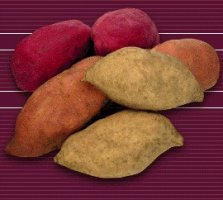
kumara

The sweet potato (Ipomoea batatas) is a dicotyledonous plant which belongs to the family Convolvulaceae. Amongst the approximately 50 genera and more than 1000 species of this family, only I. batatas is a crop plant whose large, starchy, sweet tasting tuberous roots are an important root vegetable (Purseglove, 1991; Woolfe, 1992). The young leaves and shoots are sometimes eaten as greens. The sweet potato is only distantly related to the potato (Solanum tuberosum). It is commonly confused with a yam in parts of North America, although they are only very distantly related to the other plant widely known as yams (in the Dioscoreaceae family), which is native to Africa and Asia.

The genus Ipomoea that contains the sweet potato also includes several garden flowers called morning glories, though that term is not usually extended to Ipomoea batatas. Some cultivars of Ipomoea batatas are grown as ornamental plants.

This plant is a herbaceous perennial vine, bearing alternate heart-shaped or palmately lobed leaves and medium-sized sympetalous flowers. The edible tuberous root is long and tapered, with a smooth skin whose color ranges between red, purple, brown and white. Its flesh ranges from white through yellow, orange, and purple.

Origin, Distribution And Diversity

Sweet potatoes are native to the tropical parts of South America, and were domesticated there at least 5000 years ago.

Austin (1988) postulated that the centre of origin of I. batatas was between the Yucatán Peninsula of Mexico and the mouth of the Orinoco River in Venezuela. The ‘cultigen’ had most likely been spread by local people to the Caribbean and South America by 2500 BC. Zhang et al. (1998) provided strong supporting evidence that the geographical zone postulated by Austin is the primary centre of diversity. The much lower molecular diversity found in Peru-Ecuador suggests that this region be considered as secondary centre of sweet potato diversity.

The sweet potato was also grown before western exploration in Polynesia, where it is known as the kumara. Sweet potato has been radiocarbon-dated in the Cook Islands to 1000 AD, and current thinking is that it was brought to central Polynesia circa 700 AD, possibly by Polynesians who had traveled to South America and back, and spread across Polynesia to Hawaii and New Zealand from there. It is possible, however, that South Americans brought it to the Pacific. The theory that the plant could spread by floating seeds across the ocean is not supported by evidence. Another point is that the sweet potato in Polynesia is the cultivated Ipomoea batatas, which is generally spread by vine cuttings, and not by seeds.

Sweet potatoes are now cultivated throughout tropical and warm temperate regions wherever there is sufficient water to support their growth.

According to the Food and Agriculture Organization (FAO) statistics world production in 2004 was 127,000,000 tons.[4] The majority comes from China with a production of 105,000,000 tonnes from 49,000 km². About half of the Chinese crop is used for livestock feed.

Per-capita production is greatest in countries where sweet potatoes are a staple of human consumption, led by the Solomon Islands at 160 kg per person per year, Burundi at 130 kg and Uganda at 100 kg.

20,000 tonnes of sweet potatoes are produced annually in New Zealand, where sweet potato is known by its Māori name, kūmara. It was a staple food for Māori before European contact

In the U.S., North Carolina, the leading state in sweet potato production, provided 38.5% of the 2007 U.S. production of sweet potatoes. California, Louisiana, and Mississippi compete closely with each other in production. Louisiana has been a long-time major producer, once second only to North Carolina, and closely followed by California until the latter began surpassing it in 2002. In 2007, California produced 23%, Louisiana 15.9%, and Mississippi 19% of the U.S. total.

Opelousas, Louisiana’s Yambilee has been celebrated every October since 1946. The Frenchmen who established the first settlement at Opelousas in 1760 discovered the native Attakapas, Alabama, Choctaw, and Opelousas Indian Tribes eating sweet potatoes. The sweet potato became a favorite food item of the French and Spanish settlers and thus continued a long history of cultivation in Louisiana.

Mississippi, with about 150 farmers presently growing sweet potatoes on approximately 8,200 acres (33 km2) and contributing $19 million dollars to the state’s economy. Mississippi’s top five sweet potato producing counties are Calhoun, Chickasaw, Pontotoc, Yalobusha, and Panola. The National Sweet Potato Festival is held annually the entire first week in November in Vardaman (Calhoun County), which proclaims itself as “The Sweet Potato Capital”.

The town of Benton, Kentucky celebrates the sweet potato annually with its Tater Day Festival on the first Monday of April. The town of Gleason, Tennessee celebrates the sweet potato on Labor Day weekend with its Tater Town Special.

Cultivation

The plant does not tolerate frost. It grows best at an average temperature of 24 °C (75 °F), abundant sunshine and warm nights. Annual rainfalls of 750-1000 mm are considered most suitable, with a minimum of 500 mm in the growing season. The crop is sensitive to drought at the tuber initiation stage 50–60 days after planting and is not tolerant to water-logging, as it may cause tuber rots and reduce growth of storage roots if aeration is poor (Ahn, 1993).

Depending on the cultivar and conditions, tuberous roots mature in two to nine months. With care, early-maturing cultivars can be grown as an annual summer crop in temperate areas, such as the northern United States. Sweet potatoes rarely flower when the daylight is longer than 11 hours, as is normal outside of the tropics. They are mostly propagated by stem or root cuttings or by adventitious roots called “slips” that grow out from the tuberous roots during storage. True seeds are used for breeding only.

Under optimal conditions of 85 to 90 % relative humidity at 13 to 16 °C (55 to 61 °F), sweet potatoes can keep for six months. Colder temperatures injure the roots.

They grow well in many farming conditions and have few natural enemies; pesticides are rarely needed. Sweet potatoes are grown on a variety of soils, but well-drained light and medium textured soils with a pH range of 4.5-7.0 are more favourable for the plant (Woolfe, 1992; Ahn, 1993). They can be grown in poor soils with little fertilizer. However, sweet potatoes are very sensitive to aluminium toxicity and will die about 6 weeks after planting if lime is not applied at planting in this type of soil (Woolfe, 1992). Because they are sown by vine cuttings rather than seeds, sweet potatoes are relatively easy to plant. Because the rapidly growing vines shade out weeds, little weeding is needed, and farmers can devote time to other crops. In the tropics the crop can be maintained in the ground and harvested as needed for market or home consumption. In temperate regions sweet potatoes are most often grown on larger farms and are harvested before frosts set in.

China is the largest grower of sweet potatoes; providing about 80% of the world’s supply, 130 million tons were produced in one year (in 1990; about half that of common potatoes). Historically, most of China’s sweet potatoes were grown for human consumption, but now most (60%) are grown to feed pigs. The rest are grown for human food and for other products. Some are grown for export, mainly to Japan. China grows over 100 varieties of sweet potato.

After introduction there, sweet potatoes very early became popular in the islands of the Pacific Ocean, from Japan to Polynesia. One reason is that they were a reliable crop in cases of crop failure of other staple foods due to typhoon flooding. They are featured in many favorite dishes in Japan, Taiwan, the Philippines, and other island nations. Indonesia, Vietnam, India, and some other Asian countries are also large sweet potato growers. Uganda (the third largest grower after Indonesia), Rwanda, and some other African countries also grow a large crop which is an important part of their peoples’ diets. North and South America, the original home of the sweet potato, together grow less than three percent of the world’s supply. Europe has only a very small sweet potato production, mostly in Portugal. In the Caribbean, a variety of the sweet potato called the boniato is very popular. The flesh of the boniato is cream-colored, unlike the more popular orange hue seen in other varieties. Boniatos are not as sweet and moist as other sweet potatoes, but many people prefer their fluffier consistency and more delicate flavor. Boniatos have been grown throughout the subtropical world for centuries, but became an important commercial crop in Florida in recent years. 

Sweet potatoes were an important part of the diet in the United States for most of its history, especially in the Southeast. From the middle of the 20th century, however, they have become less popular. The average per capita consumption of sweet potatoes in the United States is only about 1.5–2 kg (4 lbs) per year, down from 13 kg (31 lb) in 1920. Southerner Kent Wrench writes: “The Sweet Potato became associated with hard times in the minds of our ancestors and when they became affluent enough to change their menu, the potato was served less often.”

New Zealanders grow enough kūmara to provide each person with 7 kg (15.4 lbs) per year, and also import substantially more than this from China.

Uses

The roots are most frequently boiled, fried, or baked. They can also be processed to make starch and a partial flour substitute. Industrial uses include the production of starch and industrial alcohol.

Culinary Uses

Although the leaves and shoots are also edible, the starchy tuberous roots are by far the most important product. In some tropical areas, they are a staple food-crop.

“Amukeke” (sun dried slices of storage roots) and “Inginyo” (sun dried crushed storage roots) are a staple food for people in north-eastern Uganda (Abidin, 2004). Amukeke is mainly for breakfast, eaten with peanut sauce. People generally eat this food while they are drinking a cup of tea in the morning, around 10 am. Inginyo will be mixed with cassava flour and tamarind, to make food called “atapa”. People eat “atapa” with smoked fish cooked in peanut sauce or with dried cowpea leaves cooked in peanut sauce.

Candied sweet potatoes are a side dish consisting mainly of sweet potatoes prepared with brown sugar, marshmallows, maple syrup, molasses, or other sweet ingredients. Often served on Thanksgiving, this dish represents traditional American cooking and of that prepared with the indigenous peoples of the Americas when settlers first arrived.

Sweet potato pie is also a traditional favorite dish in southern U.S. cuisine.

Baked sweet potatoes are sometimes offered in restaurants as an alternative to baked potatoes. They are often topped with brown sugar and butter. In Dominican Republic sweet potato is enjoyed for breakfast. In China sweet potatoes are often baked in a large iron drum and sold as street food during winter.

Sweet potato fries or chips are another common preparation, and are made by julienning and deep frying sweet potatoes, in the fashion of French fried potatoes.

Sweet potato leaves are a common side dish in Taiwanese cuisine, often boiled with garlic and vegetable oil and dashed with salt before serving. They are commonly found at bento (POJ: piān-tong) restaurants, as well as dishes featuring the sweet potato root.

The young leaves and vine tips of sweet potato leaves are widely consumed as a vegetable in West African countries (Guinea, Sierra Leone and Liberia for example), as well as in northeastern Uganda, East Africa (Abidin, 2004). According to FAO leaflet No. 13 – 1990, sweet potato leaves and shoots are a good source of vitamins A, C, and B2 (Riboflavin), and according to research done by A. KHACHATRYAN, are an excellent source of lutein.


Steamed/Boiled chunks, for a simple and healthy snack, chunks of sweet potato may be boiled in water or cooked in the microwave.

A Japanese yaki-imo vendor and cart outside Nara Park. Sweet Potato Butter can be cooked into a gourmet spread.

In Northeastern Chinese cuisine. sweet potatoes are often cut into chunks and fried before drench into a pan of boiling syrup. [11]

In Korean cuisine, sweet potato starch is used to produce dangmyeon (cellophane noodles). Sweet potatoes are also boiled, steamed, or roasted, and young stems are eaten as namul.

Japanese cuisine: Boiled sweet potato is the most common way to eat it at home. Also, the use in vegetable tempura is common. Yaki-imo (roasted sweeted potato) is a delicacy in winter, sold by hawkers. Daigaku-imo is a baked sweet potato dessert. In imo-gohan, slices or small blocks of sweet potato are cooked in rice. It is also served in nimono or nitsuke, boiled and typically flavoured with soy sauce, mirin and dashi. Because it is sweet and starchy, it is used in imo-kinton and some other wagashi (Japanese sweets), such as ofukuimo. Shōchū, a Japanese spirit normally made from the fermentation of rice, can also be made from sweet potato, in which case it is called imo-jōchū.

In New Zealand, Māori traditionally cooked their kūmara in hāngi (earth ovens). Rocks were placed on a fire in a large hole. When the fire died out, kūmara and other food was wrapped in leaves and placed on the hot rocks, then covered with earth. The kūmara was dug up again several hours later. The resulting food was very soft and tender, as though steamed. However, hangi are rare in modern New Zealand and New Zealanders, Maori or Pakeha, are more likely to consume it baked, boiled, or deep-fried (such as in kumara chips) than they are in hangi.

In Malaysia, sweet potato is often cut into small cubes and cooked with yam and coconut milk (santan) to make a sweet dessert called bubur caca. A favourite way of cooking sweet potato is deep frying slices of sweet potato in batter as a tea-time snack. In houses, sweet potatoes are usually boiled. The leaves of sweet potatoes are usually stir-fried with only garlic or with sambal belacan and dried shrimp by the Malaysian Chinese.

Non – Culinary Uses

In South America, the juice of red sweet potatoes is combined with lime juice to make a dye for cloth. By varying the proportions of the juices, every shade from pink to purple to black can be obtained.

All parts of the plant are used for animal fodder.

Sweet potatoes or camotes are often found in Moche ceramics.

Several selections are cultivated in gardens as ornamental plants for their attractive foliage, including the dark-leafed cultivars ‘Blackie’ and ‘Ace of Spades’ and the chartreuse-foliaged ‘Margarita’.

Taiwanese companies are making alcohol fuel from sweet potato.

Recipes

You can Find number of different recipe in Ayesha’s Kitchen.
Fruit Of The Week MANDARIN ORANGE

mandarin

The Mandarin orange, also known as mandarin or mandarine, is a small citrus tree (Citrus reticulata) with fruit resembling the orange. The fruit is oblate, rather than spherical. Mandarin oranges are usually eaten plain, or in fruit salads. Specifically reddish orange mandarin cultivars can be marketed as tangerines, but this is not a botanical classification.

The tree is more drought tolerant than the fruit. The mandarin is tender, and is damaged easily by cold. It can be grown in tropical and subtropical areas.

Varieties And Characteristics

The Mandarin orange is but one variety of the orange family. The mandarin has many names, some of which actually refer to crosses between the mandarin and another citrus fruit. Most canned mandarins are of the Mikan variety (derived from migan in Chinese), of which there are over 200 cultivars. One of the more well-known mikan cultivars is the “Owari”, which ripens during the late fall season in the Northern Hemisphere. Clementines, however, have displaced mikans in many markets, and are becoming the most important commercial mandarin variety.

The mandarin is easily peeled with the fingers, starting at the thick rind covering the depression at the top of the fruit, and can be easily split into even segments without squirting juice. This makes it convenient to eat, as utensils are not required to peel or cut the fruit.

The tangor, which is also called the temple orange, is a cross between the mandarin and the common orange. Its thick rind is easy to peel; and its bright orange pulp is sweet, full-flavored, and tart.

Biological characteristics

Citrus fruits varieties are usually self-fertile (needing a bee only to move pollen within the same flower) or parthenocarpic (not needing pollination and therefore seedless) (such as satsumas).

Blossoms from the Dancy cultivar are one exception. They are self sterile, therefore must have a pollenizer variety to supply pollen, and a high bee population to make a good crop.

Furthermore, some varieties, notably clementines, are usually seed free, but will develop seeds if cross-pollinated with a seeded citrus. Thus, great efforts are taken to isolate clementine orchards from any seeded citrus varieties.

Medicinal Use

-The dried peel of the fruit of C. reticulata is used in the regulation of ch’i in Traditional Chinese medicine

-The peel is also used to treat abdominal distention, enhance digestion, and to reduce phlegm.

Processing

Canned mandarin segments are peeled to remove the white pith prior to canning; otherwise, they turn bitter. Segments are peeled using a chemical process. First, the segments are scalded in hot water to loosen the skin; then they are bathed in a lye solution which digests the albedo and membranes. Finally, the segments undergo several rinses in plain water.

Recipes

You can Find number of recipes containing oranges in Ayesha’s Kitchen:

Flu Fighter

Vegetable Of The Week POTATO

Potatoes

The potato is a starchy, tuberous crop from the perennial Solanum tuberosum of the Solanaceae family. The word potato may refer to the plant itself as well. In the region of the Andes, there are some other closely related cultivated potato species. Potatoes are the world’s fourth largest food crop, following rice, wheat, and maize.

Wild potato species occur from the United States to Uruguay and Chile. Genetic testing of the wide variety of cultivars and wild species suggest that the potato has a single origin in the area of southern Peru, from a species in the Solanum brevicaule complex. However, although Peru is essentially the birthplace of the potato, today over 99% of all cultivated potatoes worldwide are descendants of a subspecies indigenous to south-central Chile. Based on historical records, local agriculturalists, and DNA analyses, the most widely cultivated variety worldwide, Solanum tuberosum ssp. tuberosum, is believed to be indigenous to Chiloé Archipelago where it was cultivated as long as 10,000 years ago.

The potato was introduced to Europe in 1536, and subsequently by European mariners to territories and ports throughout the world.[8] Thousands of varieties persist in the Andes, where over 100 varieties might be found in a single valley, and a dozen or more might be maintained by a single agricultural household.[9] Once established in Europe, the potato soon became an important food staple and field crop. But lack of genetic diversity, due to the fact that very few varieties were initially introduced, left the crop vulnerable to disease. In 1845, a plant disease known as late blight, caused by the fungus-like oomycete Phytophthora infestans, spread rapidly through the poorer communities of western Ireland, resulting in the crop failures that led to the Great Irish Famine. 

The annual diet of an average global citizen in the first decade of the twenty-first century would include about 33 kilograms (or 73 lbs.) of potato. However, the local importance of potato is extremely variable and rapidly changing. The potato remains an essential crop in Europe (especially eastern and central Europe), where per capita production is still the highest in the world, but the most rapid expansion of potato over the past few decades has occurred in southern and eastern Asia. China is now the world’s largest potato producing country, and nearly a third of the world’s potatoes are harvested in China and India. More generally, the geographic shift of potato production has been away from wealthier countries toward lower-income areas of the world.

Description

Potato plants are herbaceous perennials that grow about 60 cm high, depending on variety, the culms dying back after flowering. They bear white, pink, red, blue or purple flowers with yellow stamens resembling those of other Solanaceous species such as tomato and aubergine. The tubers of varieties with white flowers generally have white skins, while those of varieties with colored flowers tend to have pinkish skins. Potatoes are cross-pollinated mostly by insects, including bumblebees that carry pollen from other potato plants, but a substantial amount of self-fertilizing occurs as well. Tubers form in response to decreasing day length, although this tendency has been minimized in commercial varieties. 

Potato plantsAfter potato plants flower, some varieties will produce small green fruits that resemble green cherry tomatoes, each containing up to 300 true seeds. Potato fruit contains large amounts of the toxic alkaloid solanine, and is therefore unsuitable for consumption.

All new potato varieties are grown from seeds, also called “true seed” or “botanical seed” to distinguish it from seed tubers. By finely chopping the fruit and soaking it in water, the seeds will separate from the flesh by sinking to the bottom after about a day (the remnants of the fruit will float). Any potato variety can also be propagated vegetatively by planting tubers, pieces of tubers, cut to include at least one or two eyes, or also by cuttings, a practice used in greenhouses for the production of healthy seed tubers. Some commercial potato varieties do not produce seeds at all (they bear imperfect flowers) and are propagated only from tuber pieces. Confusingly, these tubers or tuber pieces are called “seed potatoes”.

Nutrition

Nutritionally, potatoes are best known for their carbohydrate content (approximately 26 grams in a medium potato). The predominant form of this carbohydrate is starch. A small but significant portion of this starch is resistant to digestion by enzymes in the stomach and small intestine, and so reaches the large intestine essentially intact. This resistant starch is considered to have similar physiological effects and health benefits as fiber: it provides bulk, offers protection against colon cancer, improves glucose tolerance and insulin sensitivity, lowers plasma cholesterol and triglyceride concentrations, increases satiety, and possibly even reduces fat storage (Cummings et al. 1996; Hylla et al. 1998; Raban et al. 1994). The amount of resistant starch in potatoes depends much on preparation methods. Cooking and then cooling potatoes significantly increased resistant starch. For example, cooked potato starch contains about 7% resistant starch, which increases to about 13% upon cooling (Englyst et al. 1992).

Potatoes contain vitamins and minerals that have been identified as vital to human nutrition. Humans can subsist healthily on a diet of potatoes and milk; the latter supplies Vitamin A and Vitamin D. A medium potato (150g/5.3 oz) with the skin provides 27 mg of vitamin C (45% of the Daily Value (DV)), 620 mg of potassium (18% of DV), 0.2 mg vitamin B6 (10% of DV) and trace amounts of thiamin, riboflavin, folate, niacin, magnesium, phosphorus, iron, and zinc. Moreover, the fiber content of a potato with skin (2 grams) equals that of many whole grain breads, pastas, and cereals. Potatoes also contain an assortment of phytochemicals, such as carotenoids and polyphenols. The notion that “all of the potato’s nutrients” are found in the skin is an urban legend. While the skin does contain approximately half of the total dietary fiber, more than 50% of the nutrients are found within the potato itself. The cooking method used can significantly impact the nutrient availability of the potato.

Almost all the protein content of a potato is contained in a thin layer just under its skin. Citation needed] This is evident when the skin of a boiled potato is carefully peeled; it appears as a yellowish film. For maximum utilisation of this small, but valuable dietary source of protein, potatoes should be consumed whole, or peeled after cooking.

Potatoes are often broadly classified as high on the glycemic index (GI) and so are often excluded from the diets of individuals trying to follow a “low GI” eating regimen. In fact, the GI of potatoes can vary considerably depending on type (such as red, russet, white, or Prince Edward), origin (where it was grown), preparation methods (i.e., cooking method, whether it is eaten hot or cold, whether it is mashed or cubed or consumed whole, etc), and with what it is consumed (i.e., the addition of various high fat or high protein toppings) (Fernandes et al. 2006).

Recipes

Number of recipes containing potatoes can be Found in Ayesha’s Kitchen:

Potato Egg Salad

Potato Fritters

Khattay Aalu

Potato Cheese Balls

Aalu Mattar kii Sabzi

Potato Cheese Rolls (Desi)

Ayesha’s Kitchen Special Chicken Rolls

Aalu Pakoray

Potato Chicken Puff Patties

Baked Chicken With Vegetables

Garlic Bread

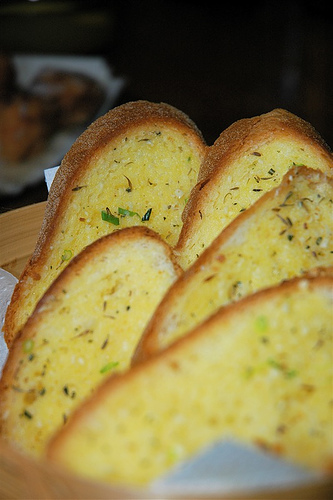
Garlic bread is one of the well known breads and you can Find it in any pasta shop, pizza shop or Italian cuisine. It is mouth watering tasty …

Ingredients:

  • 1 French bread loaf
  • 3 scoops of soft butter
  • 1 tspn garlic paste / 1 tspn garlic powder
  • 1 chopped spring onion
  • Salt and black pepper to season

Procedure:

-Cut French bread loaf diagonally leaving 1 inch distance.

-Mix butter, salt, pepper, spring onion and garlic and make soft paste.

-Apply this paste to both of the sides of French bread slices.

-Preheat oven to 160 degrees Celsius 30 minutes before baking.

-Place glazed slices on baking tray and bake For 15 minutes or until they are golden brown and crispy.

-Prepare a beautiful basket For them. Place them and immediately serve with any pasta or lasagne.

Outcome:

Tasty, hot and crispy garlic bread is ready to be served.

Garlic Bread

Tips:

-Serve them immediately after baking or they will get soggy.

Servings:

This will serve Four people.

FRUIT OF THE WEEK Papaya

pawpaw

The papaya is the Fruit of the plant carica papaya in the genus carica. It is native to the tropics of the Americas, and was cultivated in Mexico several centuries before the emergence of the Mesoamerican classic cultures. It is sometimes called a big melon or a pawpaw but the north American pawpaw is a different species, in the genus asimina.

It is a large tree – like plant, the single stem growing From 5 to 10 metres talls, with spirally arranged leaves confirmed to the top of the trunk; the lower trunk is conspicuously scarred where leaves and Fruit were borne. The leaves are large 50-70 cm diameter, deeplypalmately lobed with 7 lobes. The tree is usually unbranches if unlopped. They appear on the exils of the leaves, maturing into the large 15-45 cm long, 10 – 30 cm diameter Fruit. The Fruit is ripe when it Feels soft and its skin has attained an amber to orange hue. The Fruit’s taste is vaguely similar to pineapple and peach, although much milder without the tartness.

It is the First Fruit tree to have its genome deciphered.

Uses

Green papaya Fruit and the tree’s latex are both rich in an enzyme called papain, a protease which is useful in tenderizing meat and other proteins. Its ability to break down tough meat Fibres was utilized For thousands of years by indigenous Americans. It is included as a component in powdered meat tenderizers, and is also marketed in tablet Form to remedy digestive problems. Green papaya is used in Thai cuisine, both raw and cooked.

Papain is also popular as a tropical application in the treatment of cuts, rashes, stings and burns. Papain ointment is commonly made From Fermented papaya Flesh, and is applied as a gel – like paste.

Allergies And Side Effects

Papaya is Frequently used For hair conditioner but should be used in small proportions. Caution should be taken when harvesting, as papaya is known to release a latex Fluid when not quite ripe, which can cause irritation and provoke allergic reaction in some people. The papaya Fruit, seeds, latex, and leaves also contain carpaine, an anthelmintic alkaloid which can be dangerous in high doses.

It is also commonly believed to induce abortions and is best avoided by pregnant women.

Excessive consumption of papaya, as of carrots, can cause carotenemia, the yellowing of soles and palms which is otherwise harmless.

Recipes:

Papaya recipes can easily be Found in Ayesha’s Kitchen.