Yearly Archives: 2009

Fruit Of The Week MANGO

mangoes

Mangoes belong to the genus Mangifera, consisting of numerous species of tropical fruiting trees in the flowering plant family Anacardiaceae. The mango is indigenous to the Indian Subcontinent. Cultivated in many tropical regions and distributed widely in the world, mango is one of the most extensively exploited fruits for food, juice, flavor, fragrance and color, making it a common ingredient in new functional foods often called superfruits. Its leaves are ritually used as floral decorations at weddings and religious ceremonies. It is also the national fruit of India, Pakistan and the Philippines.

Etymology

The word mango comes from the Portuguese manga, which is probably derived from the Malayalam മാങ്ങ (māṅṅa; pronounced “manga”). The word’s first recorded attestation in a European language was a text by Ludovico di Varthema in Italian in 1510, as Manga; the first recorded occurrences in languages such as French and post-classical Latin appear to be translations from this Italian text. The origin of the -o ending in English is unclear.

Description

Mango trees (Mangifera indica L.) reach 35–40 m in height, with a crown radius of 10 m. The tree is long-lived with some specimens known to be over 300 years old and still fruiting. In deep soil the taproot descends to a depth of 20 feet, and the profuse, wide-spreading feeder roots also send down many anchor roots which penetrate for several feet. The leaves are evergreen, alternate, simple, 15–35 cm long and 6–16 cm broad; when the leaves are young they are orange-pink, rapidly changing to a dark glossy red, then dark green as they mature. The flowers are produced in terminal panicles 10–40 cm long; each flower is small and white with five petals 5–10 mm long, with a mild sweet odor suggestive of lily of the valley. The fruit takes from three to six months to ripen.

The ripe fruit is variable in size and color, and may be yellow, orange, red or green when ripe, depending on the cultivar.When ripe, the unpeeled fruit gives off a distinctive resinous sweet smell. In its center is a single flat oblong seed that can be fibrous or hairy on the surface, depending on the cultivar. Inside the seed coat 1–2 mm thick is a thin lining covering a single embryo, 4–7 cm long, 3–4 cm wide, and 1 cm thick.

Cultivation And Uses

Mangoes have been cultivated in the Indian subcontinent for thousands of years and reached East Asia between the 5th-4th century BC. By the 10th century AD, they were transported to East Africa and subsequently introduced to Brazil, West Indies and Mexico, where climate allows its appropriate growth. The 14th century Muslim traveler, Ibn Battuta, reported it at Mogadishu. Mango is now cultivated as a fruit tree in frost-free tropical and warmer subtropical climates like that of the Indian subcontinent; nearly half of the world’s mangoes are cultivated in India alone.

Other regions where mango is cultivated include North, South and Central America, the Caribbean, south, west and central Africa, Australia, China, Pakistan and Southeast Asia. It is easily cultivated yielding more than 1,000 cultivars, ranging from the “turpentine mango” (named for its strong taste of turpentine, which according to the Oxford Companion to Food some varieties actually contain) to the huevos de toro (“eggs of the bull”, a euphemism for “bull’s testicles”, referring to the shape and size).

Nicknamed “king of mangoes”, the Alphonso grown mainly in Devgad, Sindhudurg and Ratnagiri Districts of Maharashtra, India and favored there, is now popular in the United States. Though India is the largest producer of mangoes in the world, it accounts for less than one percent of the global mango trade.

Food

A ripe mango is sweet, with a unique taste that nevertheless varies from variety to variety. The texture of the flesh varies between cultivars, some having a soft, pulpy texture similar to an over-ripe plum, while others have firmer flesh like a cantaloupe or avocado. In some cultivars, the flesh has a fibrous texture.

A pack of amchur (or dry mango) powder in India.Mango lassi [mango smoothie] is very popular in Indian restaurants in some countries.

Indian Cuisine

In western recipes of ‘Chutney’, ripe mangoes are often used, but chutney in the Indian subcontinent is usually made with sour, unripe mangoes and hot chilis or limes.

In India, ripe mangoes are often cut into thin layers, desiccated, folded, and then cut. These bars, known as aampapdi,’ amavat or halva in Hindi, are similar to dried guava fruit bars available in Colombia. In many parts of India, people eat squeezed mango juice (called ras) on a variety of bread. This is part of the meal rather than a dessert. Unripe mangoes (which are extremely sour) are eaten with salt, and in regions where food is hotter, with salt and chili.

In Kerala, ripe mangoes are used in a dish called mambazha kaalan.

In Maharashtra,moramba (a kind of preserve, made from jaggery and mango) and aamrus (Pulp/Thick Juice made of mangoes, with a bit of sugar if needed and milk at times) are famous. A spicy, sweet and sour semi-liquid side-dish called meth-amba is made from unripe mango slices called kairi, jaggery and fenugreek seeds. They can be enjoyed with poories and polies, like jam.

In India mango is used as pickle (aachar), amawat, murraba, amchur, sukhawata & chatni or chutney.

During the hot summer months, a cooling summer drink called panha (in Marathi) and panna (across north India) is made with raw mango. Mango lassi is made by adding mango pulp to the North Indian yoghurt drink lassi.

The fruit is also used in a variety of cereal products, in particular muesli and oat granola. 

Dried and powdered unripe mango is known as amchur (sometimes spelled amchoor) in India and ambi in Urdu. Amb is a Sindhi, aamba a Marathi, and aam a Hindi, Urdu, Punjabi, and Bengali word for ‘mango’.

Non – Indian Cuisine

In the Philippines, unripe mango is eaten with bagoong. Dried strips of sweet, ripe mango are also popular, with those from Cebu exported worldwide. Guimaras produces a delicious mango.

Freshly harvested mangoes and bananas at a fruit stand on the island of Maui, Hawaii.In Mexico, mango is used to make juices, smoothies, ice cream, fruit bars, raspados, aguas frescas, pies and sweet chili sauce, or mixed with chamoy, a sweet and spicy chili paste. It is popular on a stick dipped in hot chili powder and salt or also as a main ingredient in fresh fruit combinations.

Pieces of mango can be mashed and used as a topping on ice cream or blended with milk and ice as milkshakes. In Thailand and other South East Asian countries, sweet glutinous rice is flavored with coconut then served with sliced mango as a dessert.

In other parts of South-east Asia, mangoes are pickled with fish sauce and rice vinegar. Green mangoes can be used in mango salad with fish sauce and dried schrimps.

In Taiwan, mango is a topping that can be added to shaved ice along with condensed milk.

The sweet bell pepper (capsicum) was once known as mango in parts of the United States.

In Central America (Guatemala, El Salvador, Honduras, Nicaragua and Costa Rica), mango is either eaten green with salt, pepper and hot sauce, or ripe in various forms. Only in Costa Rica, ripe mangoes are called manga to differentiate them. In Guatemala, toasted and ground pumpkin seed (called Pepita) with lime and salt are the norm when eating green mangoes.

Production And Consumption

Mangoes account for approximately fifty percent of all tropical fruits produced worldwide. The Food and Agriculture Organization of the United Nations estimates worldwide production of mangoes at more than 23 million tons in 2001.With 12 million tons produced annually (2002–3 data), India accounts for almost half of the world production, followed by China (3 million tons), Pakistan (2.25 million tons), Mexico (1.5 million tons) and Thailand (1.35 million tons). The aggregate production of 10 countries is responsible for roughly 80% of the entire world mango production.

Alphonso, Benishan or Benishaan (Banganpalli in Telugu and Tamil) and Kesar mango varieties are considered among the best mangoes in the Southern states whereas Dussehri and Langda varieties are most popular in the Northern states of India. Commonly exported, the Alphonso cultivar is grown exclusively in the Konkan region of Maharashtra.[citation needed. Alphonso is named after Afonso De Albuquerque who reputedly brought the drupe on his journeys to Goa.[citation needed] The locals took to calling this Aphoos in Konkani and in Maharashtra the pronunciation got further corrupted to Hapoos. This variety then was taken to the Konkan region of Maharashtra and other parts of India. Andhra Pradesh and Karnataka states in the south, Gujarat in western India, and Uttar Pradesh and Bihar in the north are major producers of mangoes harvested especially to make spicy mango pickles having regional differences in taste. In Pakistan the popular mangoes are the Sindhri and Chaunsa, besides other varieties like Langra, Anwar Ratoal and Malva. The Sindhri mango is primarily produced in the province of Sindh and can measure up to half a foot in length. It is generally considered one of the best mangoes in the world.[citation needed] Generally, once ripe, mangoes have an orange-yellow or reddish peel and are juicy for eating while those intended for export are often picked while under-ripe with green peels. Although producing ethylene while ripening, unripened exported mangoes do not have the same juiciness or flavor as fresh fruit.

Native green mangoes from the Philippines.Mangoes are popular throughout Latin America. In Mexico, sliced mango is eaten with chili powder and/or salt. Street vendors sell whole mangoes on a stick, dipped in the chili-salt mixture. In Indonesia and Thailand, green mango is sold by street vendors with sugar and salt and/or chili, or used in a sour salad called rujak or rojak in Malaysia and Singapore. Ayurveda considers ripe mango sweet and heating, balancing all three doshas (humors), while also providing energy. Powdered raw mango is a condiment in various cuisines.

Like other drupaceous fruits, mangoes come in both freestone and clingstone varieties.

Recipe:

Ayesha’s Kitchen is the best place to Find Mango Recipes:
Vegetable Of The Week TOMATO

tomato

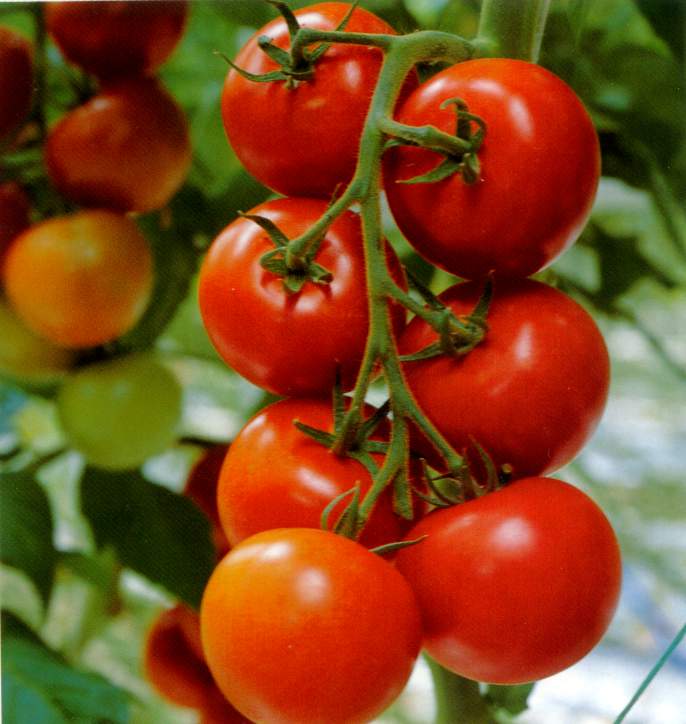
The tomato (Solanum lycopersicum, syn. Lycopersicon lycopersicum & Lycopersicon esculentum) is a herbaceous, usually sprawling plant in the Solanaceae or nightshade family, as are its close cousins potatoes, chili peppers, tobacco, eggplant and the poisonous belladonna. It is a perennial, often grown outdoors in temperate climates as an annual. Typically reaching to 1–3 metres (3–10 ft) in height, it has a weak, woody stem that often vines over other plants. The leaves are 10–25 centimetres (4–10 in) long, odd pinnate, with 5–9 leaflets on petioles, each leaflet up to 8 centimetres (3 in) long, with a serrated margin; both the stem and leaves are densely glandular-hairy. The flowers are 1–2 centimetres (0.4–0.8 in) across, yellow, with five pointed lobes on the corolla; they are borne in a cyme of 3–12 together.

The tomato is native to South America. Genetic evidence shows that the progenitors of tomatoes were herbaceous green plants with small green fruit with a center of diversity in the highlands of Peru. These early Solanums diversified into the dozen or so species of tomato recognized today. One species, Solanum lycopersicum, was transported to Mexico where it was grown and consumed by prehistoric humans. The exact date of domestication is not known. Evidence supports the theory the first domesticated tomato was a little yellow fruit, ancestor of L. cerasiforme, grown by the Aztecs of Central Mexico who called it xitomatl (pronounced [ʃiːˈtomatɬ]), meaning plump thing with a navel, and later called tomatl by other Mesoamerican peoples. Aztec writings mention tomatoes were prepared with peppers, corn and salt, likely to be the original salsa recipe.

Some people believe that the Spanish explorer Cortez may have been the first to transfer the small yellow tomato to Europe after he captured the Aztec city of Tenochtítlan , now Mexico City in 1521. Yet others believe Christopher Columbus, an Italian working for the Spanish monarchy, was the first European to take back the tomato, earlier in 1493. The earliest discussion of the tomato in European literature appeared in an herbal written in 1544 by Pietro Andrea Mattioli, an Italian physician and botanist, who named it pomi d’oro, golden apple.

The word tomato comes from a word in the Nahuatl language, tomatl. The specific name, lycopersicum, means “wolf-peach” (compare the related species Solanum lycocarpum, whose scientific name means “wolf-fruit”, common name “wolf-apple”), as they are a major food of wild canids in South America.

Cultivation And Uses

The tomato is now grown worldwide for its edible fruits, with thousands of cultivars having been selected with varying fruit types, and for optimum growth in differing growing conditions. Cultivated tomatoes vary in size from tomberries, about 5mm in diameter, through cherry tomatoes, about the same 1–2 centimetres (0.4–0.8 in) size as the wild tomato, up to “beefsteak” tomatoes 10 centimetres (4 in) or more in diameter. The most widely grown commercial tomatoes tend to be in the 5–6 centimetres (2.0–2.4 in) diameter range. Most cultivars produce red fruit; but a number of cultivars with yellow, orange, pink, purple, green, black, or white fruit are also available. Multicolored and striped fruit can also be quite striking. Tomatoes grown for canning and sauces are often elongated, 7–9 centimetres (3–4 in) long and 4–5 centimetres (1.6–2.0 in) diameter; they are known as plum tomatoes, and have a lower water content. Roma-type tomatoes are important cultivars in the Sacramento Valley where a 120-acre Morning Star cannery handles 1.2 million pounds of tomatoes an hour during the harvest season where the fields yield about 40 tons to the acre.

Tomatoes are one of the most common garden fruits in the United States and, along with zucchini, have a reputation for outproducing the needs of the grower.

As in most sectors of agriculture, there is increasing demand in developed countries for organic tomatoes, as well as heirloom tomatoes, to make up for flavor and texture faults in commercial tomatoes. Quite a few seed merchants and banks provide a large selection of heirloom seeds. Tomato seeds are occasionally organically produced as well, but only a small percentage of organic crop area is grown with organic seed[citation needed]. The definition of an heirloom tomato is vague, but unlike commercial hybrids, all are self-pollinators who have bred true for 40 years or more.

Picking And Ripening

Tomatoes are often picked unripe (and thus colored green) and ripened in storage with ethylene. Unripe tomatoes are firm, as they ripen they soften until reaching the ripe state where they are red or orange in color and slightly soft to the touch. Ethylene is a hydrocarbon gas produced by many fruits that acts as the molecular cue to begin the ripening process. Tomatoes ripened in this way tend to keep longer but have poorer flavor and a mealier, starchier texture than tomatoes ripened on the plant. They may be recognized by their color, which is more pink or orange than the other ripe tomatoes’ deep red.

In 1994 Calgene introduced a genetically modified tomato called the ‘FlavrSavr’ which could be vine ripened without compromising shelf life. However, the product was not commercially successful (see main article for details) and was only sold until 1997.

Recently, stores have begun selling “tomatoes on the vine”, which are determinate varieties that are ripened or harvested with the fruits still connected to a piece of vine. These tend to have more flavor than artificially ripened tomatoes (at a price premium), but still may not be the equal of local garden produce.

Slow-ripening cultivars of tomato have been developed by crossing a non-ripening cultivar with ordinary tomato cultivars. Cultivars were selected whose fruits have a long shelf life and at least reasonable flavor.

Modern Uses And Nutrition

Tomatoes are now eaten freely throughout the world, and their consumption is believed to benefit the heart among other things. They contain lycopene, one of the most powerful natural antioxidants, which, especially when tomatoes are cooked, has been found to help prevent prostate cancer. However, other research contradicts this claim. Lycopene has also been shown to improve the skin’s ability to protect against harmful UV rays. Natural genetic variation in tomatoes and their wild relatives has given a genetic treasure trove of genes that produce lycopene, carotene, anthocyanin, and other antioxidants. Tomato varieties are available with double the normal vitamin C (Doublerich), 40 times normal vitamin A (97L97), high levels of anthocyanin (P20 Blue), and two to four times the normal amount of lycopene (numerous available cultivars with the high crimson gene).

Though it is botanically a berry, a subset of fruit, the tomato is nutritionally categorized as a vegetable (see below). Since “vegetable” is not a botanical term, there is no contradiction in a plant part being a fruit botanically while still being considered a vegetable.

Tomatoes are used extensively in Mediterranean cuisine, especially Italian and Middle Eastern cuisines. The tomato is acidic; this acidity makes tomatoes especially easy to preserve in home canning whole, in pieces, as tomato sauce, or paste. Tomato juice is often canned and sold as a beverage; Unripe green tomatoes can also be breaded and fried, used to make salsa, or pickled. The fruit is also preserved by drying, often by sun, and sold either in bags or in jars in oil.

Storage

Most tomatoes today are picked before fully ripened. They are bred to continue ripening, but the enzyme that ripens tomatoes stops working when it reaches temperatures below 12.5°C (54.5°F). Once an unripe tomato drops below that temperature, it will not continue to ripen. Once fully ripe, tomatoes can be stored in the refrigerator but are best kept at room temperature. Tomatoes stored in the refrigerator tend to lose flavor, but will still be edible; thus the “Never Refrigerate” stickers sometimes placed on tomatoes in supermarkets.

Fruit or vegetable?

Botanically, a tomato is the ovary, together with its seeds, of a flowering plant: therefore it is a fruit. However, the tomato is not as sweet as those foodstuffs usually called fruits and, from a culinary standpoint, it is typically served as part of a salad or main course of a meal, as are vegetables, rather than at dessert in the case of most fruits. As noted above, the term vegetable has no botanical meaning and is purely a culinary term. Originally the controversy was that tomatoes are treated as a fruit in home canning practices. Tomatoes are acidic enough to be processed in a water bath rather than a pressure cooker as “vegetables” require.

This argument has had legal implications in the United States. In 1887, U.S. tariff laws that imposed a duty on vegetables but not on fruits caused the tomato’s status to become a matter of legal importance. The U.S. Supreme Court settled the controversy on May 10, 1893 by declaring that the tomato is a vegetable, based on the popular definition that classifies vegetables by use, that they are generally served with dinner and not dessert (Nix v. Hedden (149 U.S. 304)). The holding of the case applies only to the interpretation of the Tariff Act of March 3, 1883, and the court did not purport to reclassify the tomato for botanical or other purpose. Tomatoes have been designated the state vegetable of New Jersey. Arkansas took both sides by declaring the “South Arkansas Vine Ripe Pink Tomato” to be both the state fruit and the state vegetable in the same law, citing both its culinary and botanical classifications. In 2006, the Ohio House of Representatives passed a law that would have declared the tomato to be the official state fruit, but the bill died when the Ohio Senate failed to act on it. However, in April 2009 a new form of the bill passed, making the tomato the official fruit of the state of Ohio. Tomato juice has been the official beverage of Ohio since 1965. A.W. Livingston, of Reynoldsburg, Ohio, played a large part in popularizing the tomato in the late 1800s.

Due to the scientific definition of a fruit, the tomato remains a fruit when not dealing with US tariffs. Nor is it the only culinary vegetable that is a botanical fruit: eggplants, cucumbers, and squashes of all kinds (such as zucchini and pumpkins) share the same ambiguity.

Recipes:

Ayesha’s Kitchen is the best place to Find the recipes containing Tomatoes.

Margherita

Margherita Pizza is ideal For cheese lovers, it is awesome …

Ingredients:

  • One thin crust pizza base
  • 1 ½ cup mozzarella cheese
  • ½ tspn oregano
  • 6 tbspns pizza sauce/ chunky tomato sauce/ traditional pasta sauce

Procedure:

-Preheat oven to 190 degrees Celsius For 20 minutes before baking.

-Prepare a pizza base and apply some olive oil on its sides.

-Spread pizza sauce all over and sprinkle mozzarella cheese too. Top it with a little bit of oregano and bake on the middle rack, in a preheated oven For 10 – 20 minutes on 190 degrees Celsius.

-Take it out and let it settle, slice and serve.

Outcome:

Simple yet tasty Margherita is ready to be served.

DSC01668

Tips:

-This is ideal For thin crust pizza lovers.

Servings:

This will serve 2 – 4 persons easily.

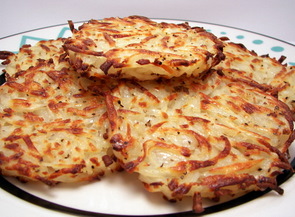
Potato Hash Browns

Potato hash browns is one of the Favourite things in breakfast For Maoris, local people of New Zealand. These people are Fond of potatoes and try to add them in their meals on daily basis. This is awesome, do try this and make your day …

Ingredients:

  • 4 cups peeled and shredded russet potatoes
  • 2 tablespoons cornstarch
  • ½ teaspoon salt
  • ¼ teaspoon fresh ground black pepper
  • ¼ teaspoon onion powder
  • ¼ teaspoon garlic powder

Procedure:

-Preheat oven to 200 degrees Celsius.

-In a large bowl, add shredded potatoes and cover with cold water – let stand for 5 to 10 minutes. Drain, rinse potatoes and then drain well again. Pat potatoes dry with paper towels or give them a whirl in a salad spinner.

-In a large bowl, toss together potatoes, cornstarch, salt, pepper, onion powder and garlic powder until well combined.

-Place a 3″ round biscuit cutter on baking sheet coated with non-stick spray. Scoop about ½ cup of the potato mixture into the biscuit cutter and lightly press down. Gently lift up the cutter, being careful to leave the potato patties intact. Repeat the procedure with remaining potato mixture. Coat tops of potato patties with olive oil cooking spray. Bake for 20 minutes – carefully turn them over and continue to bake until golden bowl, about 15 more minutes.

Outcome:

Tasty potato hash brownies are ready to be served with any sort of breakfast or in Veggie burger.

HashRounds

Tips:

-Baking will make your hash brownies crisper instead of Frying.

Servings:

This will serve 6 persons easily.

Fruit Of The Week PEAR

pears

The pear is an edible pomaceous fruit produced by a tree of genus Pyrus (pronounced /ˈpaɪrəs/).The pear is classified within Maloideae, a subfamily within Rosaceae. The apple (Malus ×domestica), which it resembles in floral structure, is also a member of this subfamily.

The English word pear is probably from Common West Germanic *pera, probably a loanword of Vulgar Latin pira, the plural of pirum, akin to Greek api(r)os, which is likely of Semitic origin. The place name Perry can indicate the historical presence of pear trees. The term “pyriform” is sometimes used to describe something which is “pear-shaped”.

History

The cultivation of the pear in cool temperate climates extends to the remotest antiquity. Many traces of it have been found in the Swiss lake-dwellings. The word “pear” or its equivalent occurs in all the Celtic languages, while in Slavonic and other dialects different appellations, but still referring to the same thing, are found—a diversity and multiplicity of nomenclature which led Alphonse de Candolle to infer a very ancient cultivation of the tree from the shores of the Caspian to those of the Atlantic.

Pears grow in the sublime orchard of Alcinous, in Odyssey vii: “Therein grow trees, tall and luxuriant, pears and pomegranates and apple-trees with their bright fruit, and sweet figs, and luxuriant olives. Of these the fruit perishes not nor fails in winter or in summer, but lasts throughout the year.”

The pear was cultivated also by the Romans, who did not eat them raw: Pliny’s Natural History recommended stewing them with honey and noted three dozen varieties. The Roman cookbook attributed to Apicius, De re coquinaria, has a recipe for a spiced stewed-pear patina, or soufflé.

A certain race of pears, with white down on the under surface of their leaves, is supposed to have originated from P. nivalis, and their fruit is chiefly used in France in the manufacture of perry (see also cider). Other small-fruited pears, distinguished by their early ripening and apple-like fruit, may be referred to P. cordata, a species found wild in western France, and in Devonshire and Cornwall. Pears have been cultivated in China for approximately 3000 years. The genus is thought to have originated in present-day western China in the foothills of the Tian Shan, a mountain range of Central Asia, and to have spread to the north and south along mountain chains, evolving into a diverse group of over 20 widely recognized primary species. The enormous number of varieties of the cultivated European pear (Pyrus communis subsp. communis), are without doubt derived from one or two wild subspecies (P. communis subsp. pyraster and P. communis subsp. caucasica), widely distributed throughout Europe, and sometimes forming part of the natural vegetation of the forests. In England, where an ancient pear tree gave its name to[citation needed] Pirio (Perry Barr, a district of Birmingham) in Domesday, the pear is sometimes considered wild; there is always the doubt that it may not really be so, but the produce of some seed of a cultivated tree deposited by birds or otherwise, which has germinated as a wild-form spine-bearing tree. Court accounts of Henry III of England record pears shipped from Rochelle and presented to the King by the Sheriffs of London. The French names of pears grown in English medieval gardens suggests that their reputation, at the least, was French; a favored variety in the accounts was named for Saint Rule or Regul’, bishop of Senlis.

Asian species with medium to large edible fruit include P. pyrifolia, P. ussuriensis, P. ×bretschneideri, P. ×sinkiangensis, and P. pashia. Other small-fruited species are frequently used as rootstocks for the cultivated species.

Botany

Pears are native to coastal and mildly temperate regions of the Old World, from western Europe and north Africa east right across Asia. They are medium sized trees, reaching 10–17 m tall, often with a tall, narrow crown; a few species are shrubby. The leaves are alternately arranged, simple, 2–12 cm long, glossy green on some species, densely silvery-hairy in some others; leaf shape varies from broad oval to narrow lanceolate. Most pears are deciduous, but one or two species in southeast Asia are evergreen. Most are cold-hardy, withstanding temperatures between −25 °C and −40 °C in winter, except for the evergreen species, which only tolerate temperatures down to about −15 °C. The flowers are white, rarely tinted yellow or pink, 2–4 cm diameter, and have five petals. Like that of the related apple, the pear fruit is a pome, in most wild species 1–4 cm diameter, but in some cultivated forms up to 18 cm long and 8 cm broad; the shape varies in most species from oblate or globose, to the classic pyriform ‘pear-shape’ of the European Pear with an elongated basal portion and a bulbous end.

The fruit is composed of the receptacle or upper end of the flower-stalk (the so-called calyx tube) greatly dilated. Enclosed within its cellular flesh is the true fruit: five cartilaginous carpels, known colloquially as the “core”. From the upper rim of the receptacle are given off the five sepals, the five petals, and the very numerous stamens.

The pear is very similar to the apple in cultivation, propagation and pollination.

Pears and apples cannot always be distinguished by the form of the fruit; some pears look very much like some apples. One major difference is that pears have “grit” – clusters of lignified cells. Pear trees and apple trees do have several visible differences. The pear and the apple are also related to the quince.

There are about 30 primary species, major subspecies, and naturally occurring interspecific hybrids of pears.

Cultivation

The pear may be readily raised by sowing the pips of ordinary cultivated or of wilding kinds, these forming what are known as free or pear stocks, on which the choicer varieties are grafted for increase. For new varieties the flowers can be cross-bred to preserve or combine desirable traits. The fruit of the pear is produced on spurs, which appear on shoots more than one year old.

Three species account for the vast majority of edible fruit production, the European Pear Pyrus communis subsp. communis cultivated mainly in Europe and North America, the Chinese white pear (bai li) Pyrus ×bretschneideri, and the Nashi Pear Pyrus pyrifolia (also known as Asian Pear or Apple Pear), both grown mainly in eastern Asia. There are thousands of cultivars of these three species. A species grown in western China, P. sinkiangensis, and P. pashia, grown in southern China and south Asia, are also produced to a lesser degree.

Other species are used as rootstocks for European and Asian pears and as ornamental trees. The Siberian Pear, Pyrus ussuriensis (which produces unpalatable fruit) has been crossed with Pyrus communis to breed hardier pear cultivars. The Bradford Pear (Pyrus calleryana ‘Bradford’) in particular has become widespread in North America and is used only as an ornamental tree. The Willow-leafed Pear (Pyrus salicifolia) is grown for its attractive slender, densely silvery-hairy leaves.

Harvest

Summer and autumn pears are gathered before they are fully ripe, while they are still green, but snap off when lifted. If left to ripen and turn yellow on the tree, the sugars will turn to starch crystals and the pear will have a gritty texture inside. In the case of the ‘Passe Crassane’, long the favored winter pear in France, the crop should be gathered at three different times, the first a fortnight or more before it is ripe, the second a week or ten days after that, and the third when fully ripe. The first gathering will come into eating latest, and thus the season of the fruit may be considerably prolonged.

Uses

Pears are consumed fresh, canned, as juice, and dried. The juice can also be used in jellies and jams, usually in combination with other fruits or berries. Fermented pear juice is called perry.

Pears will ripen faster if placed next to bananas in a fruit bowl. They stay fresh for longer if kept in a fridge.

Pear wood is one of the preferred materials in the manufacture of high-quality woodwind instruments and furniture. It is also used for wood carving, and as a firewood to produce aromatic smoke for smoking meat or tobacco.

Health Benefits

Pears are rich in Vitamin A, Vitamin C, E1, copper and potassium. Pears are the least allergenic of all fruits. Because of this, it is sometimes used as the first juice introduced to infants. Along with lamb and soya formula, pears form part of the strictest exclusion diet for allergy sufferers.

Pears can be useful in treating inflammation of mucous membranes, colitis, chronic gallbladder disorders, arthritis, and gout. Pears can also be beneficial in lowering high blood pressure, controlling blood cholesterol levels, and increasing urine acidity. They are good for the lungs and the stomach.

Most of the fiber is insoluble, making pears a good laxative. The gritty fiber content may cut down on the number of cancerous colon polyps. Most of the vitamin C, as well as the dietary fibre, are contained within the skin of the fruit.

Recipes:

As you know it is a very unique Fruit, so it will not have many recipes but Few of them are here:

Vegetable Of The Week SPINACH

spinach

Spinach (Spinacia oleracea) is an edible flowering plant in the family of Amaranthaceae. It is native to central and southwestern Asia. It is an annual plant (rarely biennial), which grows to a height of up to 30 cm. Spinach may survive over winter in temperate regions. The leaves are alternate, simple, ovate to triangular-based, very variable in size from about 2-30 cm long and 1-15 cm broad, with larger leaves at the base of the plant and small leaves higher on the flowering stem. The flowers are inconspicuous, yellow-green, 3-4 mm diameter, maturing into a small hard dry lumpy fruit cluster 5-10 mm across containing several seeds.

History

Primitive forms of spinach are found in Nepal and that is probably where the plant was first domesticated. Other than the Indian subcontinent, it was unknown in the ancient world. After the early Muslim conquests the plant spread to other areas. In 647, it was taken to China, possibly by Persians. Muslim Arabs diffused the plant westward up to Islamic Spain. By the eleventh century it was a common plant in the Muslim world.

In India, in Malayalam, it is called Cheera (ചീര), in Tamil, it is called Keerai and in Marathi it is known as Palak .Paala koora in Telugu and is one among commonly consumed green vegetables.

Spinach was the favorite vegetable of Catherine de Medici, a historical figure in the 16th century. When she left her home of Florence, Italy, to marry the king of France, she brought along her own cooks, who could prepare spinach the ways that she especially liked. Since this time, dishes prepared on a bed of spinach are referred to as “a la Florentine.”

Culinary Information

Iron:

Spinach is known as a rich source of iron and calcium. According to the United States Department of Agriculture, a 180 gram serving of boiled spinach contains 6.43 mg of iron, whereas one 6 oz. (170 gram) ground hamburger patty contains at most 4.42 mg. Thus spinach does contain a relatively high level of iron, compared to other vegetable and meat sources.

The iron in spinach is poorly absorbed by the body unless eaten with vitamin C. The type of iron found in spinach is non-blood (non-heme), a plant iron, which the body does not absorb as efficiently as blood (heme) iron, found in meat.

The bioavailability of iron is dependent on its absorption. This is influenced by a number of factors. Iron enters the body in two forms: nonheme iron and heme iron. All of the iron in grains and vegetables, and about three fifths of the iron in animal food sources (meats), is nonheme iron. The much smaller remaining portion from meats is heme iron.

The larger portion of dietary iron (nonheme) is absorbed slowly in its many food sources, including spinach. This absorption may vary widely depending on the presence of binders such as fiber or enhancers, such as vitamin C. Therefore, the body’s absorption of non-heme iron can be improved by consuming foods that are rich in vitamin C. However, spinach contains iron absorption inhibiting substances, including high levels of oxalate which can bind to the iron to form ferrous oxalate, which renders much of the iron in spinach unusable by the body, In addition to preventing absorption and use, high levels of oxalates remove iron from the body. But some studies have found that the addition of oxalic acid to the diet may improve iron absorption in rats over a diet with spinach with out additional oxalic acid. However, foods such as spinach that are high in oxalic acid can increase the risk of kidney stones in some people.

Calcium

Spinach also has a high calcium content. However, the oxalate content in spinach also binds with calcium decreasing its absorption. Calcium and zinc also limit iron absorption. The calcium in spinach is the least bioavailable of calcium sources.By way of comparison, the body can absorb about half of the calcium present in broccoli, yet only around 5% of the calcium in spinach. Oxalate is one of a number of factors that can contribute to gout and kidney stones. Equally or more notable factors contributing to calcium stones are: genetic tendency, high intake of animal protein, excess calcium intake, excess vitamin D, prolonged immobility, hyperparathyroidism, renal tubular acidosis, and excess dietary fiber.

Other

Spinach has a high nutritional value and is extremely rich in antioxidants, especially when fresh, steamed, or quickly boiled. It is a rich source of vitamin A (and lutein), vitamin C, vitamin E, vitamin K, magnesium, manganese, folate, iron, vitamin B2, calcium, potassium, vitamin B6, folic acid, copper, protein, phosphorus, zinc, niacin, selenium and omega-3 fatty acids. Recently, opioid peptides called rubiscolins have also been found in spinach. It is a source of folic acid (Vitamin B9), and this vitamin was first purified from spinach. To benefit from the folate in spinach, it is better to steam it than to boil it. Boiling spinach for four minutes can halve the level of folate. 

Types Of Spinach

A distinction can be made between older varieties of spinach and more modern varieties. Older varieties tend to bolt too early in warm conditions. Newer varieties tend to grow more rapidly but have less of an inclination to run up to seed. The older varieties have narrower leaves and tend to have a stronger and more bitter taste. Most newer varieties have broader leaves and round seeds.

There are three basic types of spinach:

Savoy has dark green, crinkly and curly leaves. It is the type sold in fresh bunches in most supermarkets. One heirloom variety of savoy is Bloomsdale, which is somewhat resistant to bolting.

Flat/smooth leaf spinach has broad smooth leaves that are easier to clean than savoy. This type is often grown for canned and frozen spinach, as well as soups, baby foods, and processed foods.

Semi-savoy is a hybrid variety with slightly crinkled leaves. It has the same texture as savoy, but it is not as difficult to clean. It is grown for both fresh market and processing. Five Star is a widely grown variety and has good resistance to running up to seed.

Production, Marketing And Storage

Popeye the Sailor Man has a strong affinity for spinach, becoming physically stronger after consuming it. This is partially due to the iron content being mistakenly reported ten times the actual value, a value that was rechecked during the 1930s, where it was revealed that the original German scientist, Dr. E. von Wolf, had misplaced a decimal point in his calculations.

In truth, spinach actually has about the same iron content as a lot of other vegetables, and even less than others. Cooked broccoli and cauliflower, for example, have almost double the iron content of spinach.

Spinach, along with brussels sprouts and other green vegetables, is often considered in children’s shows to be undesirable.

Recipes:

You can Find some of the recipes containing Spinach here in Ayesha’s Kitchen:

Palak Paneer